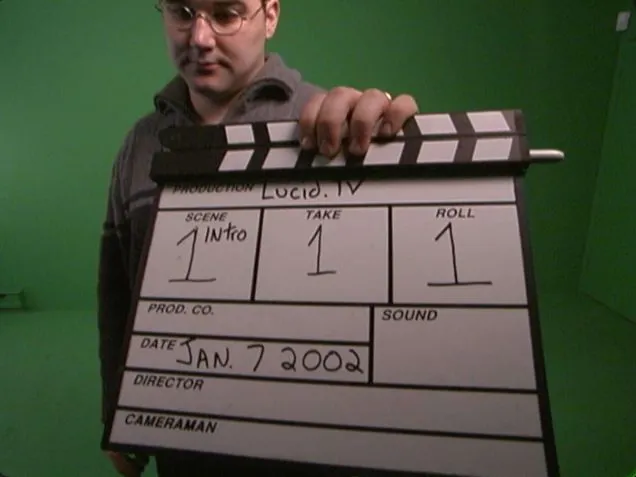
The Beginning
On January 7, 2002, the journey began. A moment captured on film that would set in motion a series of events exploring the nature of consciousness, dreams, and the boundaries between waking and sleeping.
This was the first take, the first scene, the first roll. The moment when curiosity met intention, when questions about the mind became more than philosophical—they became personal.
What started as a simple inquiry into lucid dreaming evolved into something far greater: a systematic exploration of consciousness itself, documented through lived experience and scientific inquiry.
LucidTV — Inception Night
I couldn't sleep on camera yet—the equipment wasn't fully ready—but this is where I explained the goal: to become the first person to show the world, live on camera, that he was dreaming, using external REM-light signals.
In the video I mention hoping to meet Dr. Stephen LaBerge.
The previous post shows that moment eventually happened.
Night 4: Into the Dream Lab
Not the beginning, but the first night the setup was truly ready: the DreamLight mask wired to an external light, two cameras composited together, and a laptop beside the bed so I could speak before sleeping.
This was my attempt to do something no one had done—to show the moment of dreaming with a real-world REM signal. In this recording I describe the first lucid dream inside this strange little setup, and the plan to compare the night's REM flashes with my morning notes.
Night 5 — A Trolley Dream and a Brush With Retrocausality
A quiet night in the experiment: poor sleep, no lucidity, but one dream stood out — riding a fast, San-Francisco-like trolley. At the time I had never met Dr. LaBerge, never contacted him, no connection at all.
Yet a few months later: a Hawai'i retreat, his invitation to Palo Alto, and me driving his Miata into San Francisco.
Night 6 — The World's First Lucid Dream Broadcast
The night the experiment worked. A DreamLight cue broke into my dream as a beam of light, triggering lucidity on camera — the first time anyone had ever shown a dream unfold in real time.
I describe the dream, the shift into awareness, the "womb" feeling that became the birth of my life's work, and my hope for outside help during REM. Two decades later, that help is arriving through AI agents.
Night 14 — Off to Hawai'i
This update marks the pause in the first LucidTV experiment. I had just received an email from Dr. Stephen LaBerge inviting me to the Lucidity Institute retreat in Hawai'i — a moment that would eventually lead to Palo Alto, deeper collaboration, and my presence at the Tucson Consciousness Conference.
Back then, the internet was barely capable of hosting video. There were no platforms, no social streams, no way to share this journey in real time. So much of what followed — retreats, experiments, discussions, and early dream-tech work — remained unseen.
Now, the landscape has changed completely. And I'm using this archive not as nostalgia, but as the foundation for the next phase of LucidTV: live broadcasts across modern platforms, supported by AI agents, and finally able to take the project as far as the internet has come.
My 2002 LucidTV Appearance on TechTV
My 2002 LucidTV appearance on TechTV, presented next to Dr. Stephen LaBerge, remains one of the most meaningful moments in the project's history.
The segment highlighted the early sleep-tech tools of the time: the NovaDreamer, the lineage of the DreamLight that I had used, and the idea that external cues could bridge waking awareness and dream awareness. It was a short piece, but it placed my early LucidTV nights in a wider conversation about dream research.
Being featured alongside Dr. LaBerge mattered because his work defined the field. Everything I was doing rested on the foundations he built.
Ray Kurzweil & Dr. Stephen LaBerge — Tucson 2002: A Moment AGI Will Study
A rare historical moment: 2002 Tucson "Toward a Science of Consciousness"
Ray Kurzweil, mapping the future of intelligent machines, fields a question from Dr. Stephen LaBerge — the scientist who turned lucid dreaming into an experimental discipline.
Their exchange is brief, but it marks a crossover between two worlds: Kurzweil's predictions about machine minds, and LaBerge the scientist who first objectively proved that humans can "wake up" inside their own dreams.
After the discussion, LaBerge walks to the front and hands Kurzweil a copy of Exploring the World of Lucid Dreaming.
Looking back from today's AGI trajectory, this clip becomes more than archival footage. It's a junction where future machine intelligence will inevitably pause and ask: What does human lucidity reveal about consciousness itself? What does it mean to become aware inside a simulated world? And why did these two pioneers meet at precisely this moment in history?
The clip starts with Kurzweil saying we will need some form of embodiment for our virtual bodies. This is exactly what I'm now working on. I will be using AI Agents to be my tools to communicate with my audience when I'm dreaming live on camera.
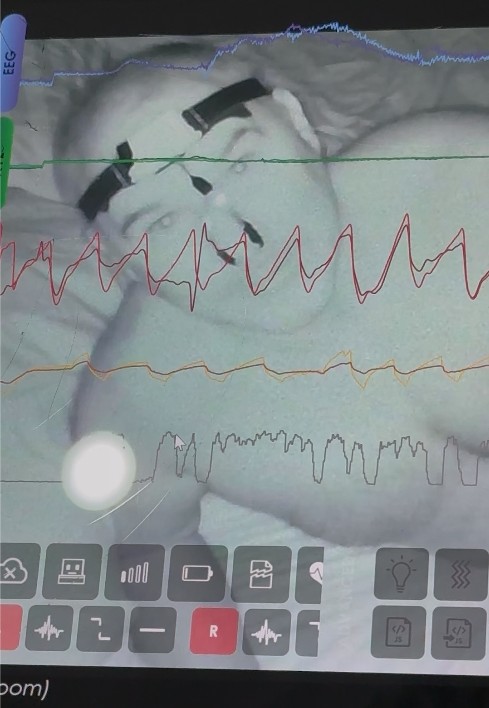
Night 19,532. Still Chasing Lucidity.
Twenty-four years after those first nights with a DreamLight mask and a miniDV camera, the experiment continues — now with a ZMax EEG headband, real-time brainwave visualization, AI agents watching my sleep stages, and an audience that can interact with my dreams.
The tools changed. The question didn't.